Tuesday, March 26, 2013
Good Friday Reading
Why the cross? Of course, there are myriads of ways to answer this question. But I have not found a more articulate response to my own feelings on the subject than this article by Anglican theologian Charles Hefling. I hope it challenges and frees you as you approach the thought of God bearing the cross this week.

Thursday, March 21, 2013
A Veggie Tale
Early in my appointment at Trinity, an elderly woman came up to me after worship and (quite randomly) asked me, "Why do we have to kill to eat?" Usually, I have some kind of packaged answer for theological questions posed to me by laity. But I had no answer for this one. First, it caught me off guard because the question seemed out of context to the worship service we just had. But second, as a Christian pacifist and lover of meat, I had no packaged answer for this one. In fact, I had no answer at all.


So I asked a lot of my preacher and div school friends. Many of them were stumped as well. Even those who are vegetarian told me they were simply protesting the inhumane manner with which animals are slaughtered. The best answer, however, came from one of my div school roommates who, oddly enough, is no longer a Christian. He told me that the early church fathers, and later Augustine, said the answer to that question was that killing animals for food was an act necessary only after the Fall of Genesis 3.
Now I know the naturalist answers: we were born with incisors, the need for protein and iron, and the simple fact that these animals are born and raised for our consumption. But none of that from a Christian perspective means that meat-consuming was part of God's intention for humankind. And, don't get me wrong: I love meat. I fancy myself a connoisseur of North Carolina barbecue. When someone else is paying, I always go for the New York strip. And, after my doctor predictably told me that my cholesterol was too high, chicken became a staple of the dinner table at my house. But my love for meat, like most things I "love", is trumped by my love for Christ and willingness to explore other routes of growth in Christ.
So I have given up meat for Lent in order to live into my exploration of this question posed to me years ago. What I have found is that I do not miss meat nearly as much as I thought I would. I have found excellent substitutes that people always told me were excellent substitutes, but I never believed them (come on, certainly a Big Mac and tofu are not in the same league). But I have learned that I can survive quite well on pasta, grits, portobellos, and greens. I have even enjoyed odd foods like quinoa and polenta. The experiment has been a bigger success than I suggested. In fact, I worry that my Lenten devotion has been easier on me than it should be. After all, I have not understood the temptation and suffering that I am supposed to know during this season of repentance. But, well, it's too late to go back now and do something more painful, right?!
One of my vegetarian pastor friends said, "It seems ridiculous to me that we feel like we need meat with every meal." At first, I thought it was just "hippie talk", but now I get it. In our super-sized nation, we can afford to keep our meals a little leaner. Plus, we are fortunate people in our world today. For most of the history of the world, and even in several places today, meat has been, and is, considered a luxury item on the menu. If anything, this Lenten devotion has placed me in slight solidarity (they didn't have access to the fancy meat substitutes I do) with those who have gone before me, and I understand a little bit more about the resilience of God's creation without the comforts of the Western world. But, like most people who try a Lenten devotional practice, I realize I have a long way to go to fully understand these things. Thanks be to the perfect God of grace, who guides us as we grow to understand God's love for all of creation.
Tuesday, January 15, 2013
On Weddings
It seems that I have either recently officiated or will soon officiate several weddings, so I've been thinking a lot about what it means to get married, especially in the church. Here are a few thoughts I have compiled.


- If you are a religious person, get married in a church, temple, synagogue, etc. I understand that it is cute and fun to get married on a beach, in a park, or in a baseball stadium, but the ceremony of marriage is a religious ceremony. If the ceremony occurs in a sanctuary of some sort, you will be surrounded by religious symbolism that will set the ceremony, and the ensuing marriage, in the proper context. I know I write this at the risk of sounding like an old fogey traditionalist, but believe it or not, there is oftentimes a good reason that a certain tradition forms.
- Since the wedding ceremony and marriage are religious acts, don't get married if you aren't religious. Somehow, what was once considered religious and sacred has bled over into the secular and state world, as the media propounds marriage as a simple fact of life that is needed if you don't want to be lonely and since the government has decided to get into the marriage business. These are only recent inventions to commandeer the religious for other reasons (see next bullet point) and, if you aren't religious, there are certainly more convenient and cheaper ways to show your commitment to your partner.
- Weddings are big business. According to Wikipedia (a reliable source, I know), the wedding industry reaps $40 billion a year. Your wedding is not that special to your florist, caterer, photographer, etc. They do not care if you will have enough money to eat dinner your first week of marriage. You are a big source of revenue to them and they will try to upsell you on everything possible (I'm speaking in generalities here). And this is only a recent phenomenon. For example, the idea of the engagement ring has only been around about 100 years or so (Thanks, Cecil Rhodes). What is supposed to be a meaningful celebration of God's gift of marriage has been grossly bastardized into brides obsessing over the most extravagant bridesmaid dresses, grooms tearing up friendships over who will be the best man, and stressing over what party favor to give guests. This is not what God had in mind.
- Marriage is not for everyone. Movies, novels, and the sentiment at the country club may indicate that your life is nothing without marriage. If you don't get married, then you must be useless and undesirable. But both Jesus and Paul were very cautious about marriage (cf. Luke 20:34-38 and 1 Cor. 7:38... not exactly passages you will hear proclaimed at the next Royal Wedding). The Bible does not see marriage as some fairy tale come true, but as a serious union with serious ramifications.
- Marriage is a serious deal in the church because, well for one, Jesus definitely wasn't a fan of divorce (Matthew 5:31-32, Matthew 19:7-9, and parallels). This is not because Jesus was looking for a way to punish us. Instead, he was concerned to create a community in which God's people would not see the brokenness of divorce unfold. Your marriage is not a vacuum and it greatly affects parents, friends, and children, whether we want to admit it or not. We pastors, as leaders of faith communities, do our best to make sure that divorce does not result from a marriage. We usually try to spend several hours in counseling with couples on the front end to make sure that couples know the seriousness of marriage. This, in my opinion, constitutes a good reason (and one that I think is more important that getting married in a church building) to be married by a serious clergyperson who has your spiritual interests in mind.
- How much should you pay your pastor? This question always comes up when I officiate a wedding. Our pay is somewhat arbitrary for officiating a ceremony and, sometimes, we pastors are too sweet and sugary to be firm in saying how much our time is worth. The standard for our church is $200. If that seems high, consider how much you pay for the dress, caterer, florist, honeymoon, etc. You can have your wedding without them. You cannot have your wedding without a pastor. And your pastor's time away from her or his family is worth something. Also, don't underestimate the amount of time your pastor spends in preparing for premarital counseling, the ceremony, and the homily. And also, unlike these vendors, your pastor has an enormous workday ahead of him tomorrow.
- If any of this sounds bitter, then I apologize for the tone. Every couple I have married has done come to the altar with the intent to grow in their faith together and has understood my fairly strict interpretation of the ceremony and marriage. But I do cringe every time I see an ad on TV for a jewelry store, a "wedding episode" of a TV show, or a thick bridal magazine on the grocery store rack without a single word of God. God deserves better than this and, frankly, you do too.
Thursday, November 29, 2012
Parenthood
I realize that (once again) I haven't posted anything for a while. I have been busy with church work, finishing my paperwork to be ordained, and have been working on a required chaplaincy unit for the North Alabama Conference. But the biggest new intrusion into my time has also been the most joyful. On August 16th, my wife and I welcomed our son, Samuel Robert, into the world.

For my entire life until that day, I had been able to conceive of God as Father. That has been possible because I have a wonderful father and grandfather, who have both been extremely influential to my life of faith. But now I am faced with being in the role of a father myself. And the experience has been far different than I expected. The consequences, as far as how I now conceive of God, have been interesting as well.
In anticipation of Sam's arrival and his first few days on this earth, I was stoked. I dreamed of teaching him German, Hebrew, and Greek. I had fantasies of throwing the football with him in the park. I imagined myself playing guitar and singing beautiful ballads to him, with him clinging expectantly to every note. In short, he was going to be the little brother I never had (in fact, my nickname for him is "Mr. Buddy").
But reality, as I feared, has set in. He has only recently begun to be able to interact with me, and that usually comes in incoherent streams of babble. He has no qualms about screaming bloody murder in the middle of watching a football game with me to tell me he is hungry or has pooped his diaper. And he definitely disregards my need for alone time or sleep. He demands my attention in every way, and has stripped me of the freedoms I used to enjoy. I was so tired of hearing this from other parents, but the cliche is true that my life has changed forever.
What this has made me realize about God is something I find very pertinent this time of year. This world, both Israel and the nations, was in desperate need of a savior. But God was not under any obligation to give us salvation. God did not need to be swayed by the cries of the disenfranchised and powerless of this world. God could have easily been a deadbeat dad by creating us and letting us be.God still would have been God. But God became the Parent of the world by sending his own Son to address that need for salvation.
In that light, the needs of my own son are not really to be feared after all. Yes, there are times when what I do for him feels like drudgery and raw obligation. But to be called out of the comfortable world in which I once lived to deliver aid to a hungry mouth and a needy heart is really the call that God gives to the church because God once did it for the world. There is truly a profound sense of faith in parenting that is found first in the faith of God. Of course, we cannot fully know the depths of God and God's love, but the glimpse of it that we find in parenting is a treasure. Thanks be to God for allowing us to participate in both the gift of new life and the provision of new life. And thanks be to God for first showing us the way of that gift and provision in Christ.
P.S.- Right after Sam was born (September 2nd), I preached a sermon at Trinity that talks a little bit about my experience as a father in light of the gospel. Here is the link to listen and, as always, I invite your feedback.

In anticipation of Sam's arrival and his first few days on this earth, I was stoked. I dreamed of teaching him German, Hebrew, and Greek. I had fantasies of throwing the football with him in the park. I imagined myself playing guitar and singing beautiful ballads to him, with him clinging expectantly to every note. In short, he was going to be the little brother I never had (in fact, my nickname for him is "Mr. Buddy").
But reality, as I feared, has set in. He has only recently begun to be able to interact with me, and that usually comes in incoherent streams of babble. He has no qualms about screaming bloody murder in the middle of watching a football game with me to tell me he is hungry or has pooped his diaper. And he definitely disregards my need for alone time or sleep. He demands my attention in every way, and has stripped me of the freedoms I used to enjoy. I was so tired of hearing this from other parents, but the cliche is true that my life has changed forever.
What this has made me realize about God is something I find very pertinent this time of year. This world, both Israel and the nations, was in desperate need of a savior. But God was not under any obligation to give us salvation. God did not need to be swayed by the cries of the disenfranchised and powerless of this world. God could have easily been a deadbeat dad by creating us and letting us be.God still would have been God. But God became the Parent of the world by sending his own Son to address that need for salvation.
In that light, the needs of my own son are not really to be feared after all. Yes, there are times when what I do for him feels like drudgery and raw obligation. But to be called out of the comfortable world in which I once lived to deliver aid to a hungry mouth and a needy heart is really the call that God gives to the church because God once did it for the world. There is truly a profound sense of faith in parenting that is found first in the faith of God. Of course, we cannot fully know the depths of God and God's love, but the glimpse of it that we find in parenting is a treasure. Thanks be to God for allowing us to participate in both the gift of new life and the provision of new life. And thanks be to God for first showing us the way of that gift and provision in Christ.
P.S.- Right after Sam was born (September 2nd), I preached a sermon at Trinity that talks a little bit about my experience as a father in light of the gospel. Here is the link to listen and, as always, I invite your feedback.
Thursday, July 5, 2012
Friends and Unbelief
A few weekends ago, I took a Sunday off to attend the wedding of a close friend in Tennessee. One of the reasons he is such a close friend is because of some conversations we had a few years ago when he was enduring a crisis of faith. He grew up nominally Christian in an Episcopal church. When I met him during my freshman year of college, I thought he exhibited a very clean, perhaps one could say Christian, lifestyle. He always refrained from alcohol, drugs, and sex. But he was also very unhappy and confused about faith. He was extremely closed off and shy, gave short answers to every question, and rarely smiled. Whenever I brought up religion, he would often say that he could not believe in God without "proof" (he is an engineer, so that should give you a hint as to why this would be a hangup for him). Long story short, his life changed dramatically when he met the girl he married. He started attending an evangelical congregation with her every Sunday, he was happier than I had ever seen him, and he would call me once a month, asking questions about faith. I was pleased to see this transformation that God had wrought in him (even if I did urge him to try other denominations!). I am humbled to have been a small part of it and am excited that we have become closer friends as a result.
I tell my friend's story because he and I share three other friends who are not Christian. They are great guys and mean a lot to me, but I find myself anxious at their unbelief. At the wedding, one of them talked openly about how he and his wife are "agnostics". His unbelief stems largely from his training as a scientist. The other two are well-read in philosophy and consider themselves Nietzschean. I struggle with this because they are already good friends to me. There is not much I would change about them. But yet, I strongly desire for them to know God the way I do.
All of this has made me question myself about why I want them to believe: Is it because of my own southern, evangelical bent? Am I genuinely worried about their eternal souls? Or do I just want them to be more like me? And going further, are these even legitimate concerns? If they are good guys, does it really matter whether or not they make a faith commitment to Christ?
In the end, I have decided that I can't control their faith commitments. I can only control how I love them and how my faith bears fruit in their presence. Yet, because these guys are old, close friends, I'm afraid that I rarely exhibit such behavior. When I am around them, I tend to relapse into my old irreverent, immature, sophomoric version of myself from age 20. And, in many ways, they have shown better Christian love to me than I have to them. For instance, after a particularly rough time in my life, this group of guys gave up their senior year spring break to visit and comfort me for a week. For me, it was a real-life example of the righteousness of the Pharisees being exceeded.
While I still pray for my friends, I also pray for myself. I pray that I may witness to them in a way shaped by the cross, a way that only faith in Jesus Christ can form. Maybe then they will know by my witness. Maybe they will know by someone else's. Maybe they will never know. But I do trust that God is working on them and me in a way that I cannot surmise on my own. After all, I believe he has brought us together, different as we are, in friendship.
I tell my friend's story because he and I share three other friends who are not Christian. They are great guys and mean a lot to me, but I find myself anxious at their unbelief. At the wedding, one of them talked openly about how he and his wife are "agnostics". His unbelief stems largely from his training as a scientist. The other two are well-read in philosophy and consider themselves Nietzschean. I struggle with this because they are already good friends to me. There is not much I would change about them. But yet, I strongly desire for them to know God the way I do.
All of this has made me question myself about why I want them to believe: Is it because of my own southern, evangelical bent? Am I genuinely worried about their eternal souls? Or do I just want them to be more like me? And going further, are these even legitimate concerns? If they are good guys, does it really matter whether or not they make a faith commitment to Christ?
In the end, I have decided that I can't control their faith commitments. I can only control how I love them and how my faith bears fruit in their presence. Yet, because these guys are old, close friends, I'm afraid that I rarely exhibit such behavior. When I am around them, I tend to relapse into my old irreverent, immature, sophomoric version of myself from age 20. And, in many ways, they have shown better Christian love to me than I have to them. For instance, after a particularly rough time in my life, this group of guys gave up their senior year spring break to visit and comfort me for a week. For me, it was a real-life example of the righteousness of the Pharisees being exceeded.
While I still pray for my friends, I also pray for myself. I pray that I may witness to them in a way shaped by the cross, a way that only faith in Jesus Christ can form. Maybe then they will know by my witness. Maybe they will know by someone else's. Maybe they will never know. But I do trust that God is working on them and me in a way that I cannot surmise on my own. After all, I believe he has brought us together, different as we are, in friendship.
Wednesday, June 6, 2012
The Gospel and Mental Illness
I will begin this post with a confession: I struggle with anxiety and depression. There, I said it. The guy who stands up in front of a thousand-plus people almost every Sunday to talk about the good news of God regularly sees a shrink and takes crazy pills. Hypocrite... right?

Well, in many other ways, yes. But in this instance, I'm not so sure. Since I was about sixteen or so, I have suffered from anxiety and depression. I have wrestled with dark thoughts, moodiness, social anxiety, and, in my teenage years, suicidal thoughts. These symptoms have not been constant, but rather have come in year-long-or-so waves over the past twelve years. And in the midst of all of this, I have been highly functional- or at least good at hiding my symptoms from others. For a long time, this has been my dark secret that I did not want others to know about. It was a huge stumbling block in answering my call to ministry. I thought that there was no way a person who leads others in their journey away from the slavery of angst and into the glory of God could suffer from a mental illness. Something must be terribly wrong with my faith. But I have found this to be just the opposite.
I have confessed my illness to several preachers and, to my surprise, many have replied, "I struggle with it too." Recently, I read this excellent interview with a pastor of a large African-American church, who has struggled holding together his leadership in the church and his depression. In fact, one of the things I have learned from the more experienced pastors who struggle with mental illness is to share and be open with our congregation about mental illness and all of our weaknesses. Doing so allows us to be, as Henri Nouwen once fleshed out in his classic book, "wounded healers". It enables us to point to the enormous grace of God when we sing, "You are my strength when I am weak." It illuminates that old adage that the church truly is a "hospital for sinners"- even for its leadership (after all, physicians are not immune to disease). It gives us the ability to sit alongside those in the congregation who struggle, to empathize with them, and to be fellow-sharers with our flock as we all grow together into holiness. In short, I think sharing and openness protect all of us in the church from the truest illness, self-righteousness.
Someone once told me that upwards of 35-40% of Americans have some sort of mental illness. I have not checked my facts and I don't know if that's true. If it is, you can point to societal issues and personal "attitudes", and you can rightly assert that something is wrong with our world. Perhaps these are major causes of mental illness. Given that mental illness runs strongly in one side of my family, I am tempted to say that it is both these factors and a biological/genetic issue. I am no psychiatrist and I don't know for sure. But as a preacher, I can say, let's no longer chastise those with mental illnesses, fight the powers that are at its root, whatever those powers may be, and submit our weaknesses to God together in order to see how great and wonderful is his grace.

Well, in many other ways, yes. But in this instance, I'm not so sure. Since I was about sixteen or so, I have suffered from anxiety and depression. I have wrestled with dark thoughts, moodiness, social anxiety, and, in my teenage years, suicidal thoughts. These symptoms have not been constant, but rather have come in year-long-or-so waves over the past twelve years. And in the midst of all of this, I have been highly functional- or at least good at hiding my symptoms from others. For a long time, this has been my dark secret that I did not want others to know about. It was a huge stumbling block in answering my call to ministry. I thought that there was no way a person who leads others in their journey away from the slavery of angst and into the glory of God could suffer from a mental illness. Something must be terribly wrong with my faith. But I have found this to be just the opposite.
I have confessed my illness to several preachers and, to my surprise, many have replied, "I struggle with it too." Recently, I read this excellent interview with a pastor of a large African-American church, who has struggled holding together his leadership in the church and his depression. In fact, one of the things I have learned from the more experienced pastors who struggle with mental illness is to share and be open with our congregation about mental illness and all of our weaknesses. Doing so allows us to be, as Henri Nouwen once fleshed out in his classic book, "wounded healers". It enables us to point to the enormous grace of God when we sing, "You are my strength when I am weak." It illuminates that old adage that the church truly is a "hospital for sinners"- even for its leadership (after all, physicians are not immune to disease). It gives us the ability to sit alongside those in the congregation who struggle, to empathize with them, and to be fellow-sharers with our flock as we all grow together into holiness. In short, I think sharing and openness protect all of us in the church from the truest illness, self-righteousness.
Someone once told me that upwards of 35-40% of Americans have some sort of mental illness. I have not checked my facts and I don't know if that's true. If it is, you can point to societal issues and personal "attitudes", and you can rightly assert that something is wrong with our world. Perhaps these are major causes of mental illness. Given that mental illness runs strongly in one side of my family, I am tempted to say that it is both these factors and a biological/genetic issue. I am no psychiatrist and I don't know for sure. But as a preacher, I can say, let's no longer chastise those with mental illnesses, fight the powers that are at its root, whatever those powers may be, and submit our weaknesses to God together in order to see how great and wonderful is his grace.
Thursday, May 17, 2012
Church Growth and Anxiety
Check out this post by Sarah Howell, daughter of the pastor from my home church and a very promising young preacher in her own right. In this article, Sarah cautions the church from becoming overly anxious about growth strategies, because, after all, God is in charge. Her article prompts several questions about evangelism for the reader: How does the church share the good news without spreading itself thin? How do we as Christians walk the fine line between our duty/calling from God and our rest in God? What is evangelism anyway?
Wednesday, April 25, 2012
Go to Israel!
OK, so I have been slacking on the blog lately. But in my defense, Easter just finished a few weeks ago, and I have had a lot going on. One of those things that went on was an amazing trip to the Holy Land. Back in February, I went to Israel with a group of 40 from my home church, Myers Park UMC in Charlotte. The group was led by my role model in ministry, Dr. James Howell. Dr. Howell holds a Ph.D. in Old Testament/Hebrew Bible, and really knows his stuff. It was was a once-in-a-lifetime treat to sit at his proverbial feet and listen to his wisdom on Scripture, archaeology, and the ministry. On top of that, it was great to meet and spend time with some wonderful disciples of Christ, including my parents (who I don't get to see very often).
Instead of giving you a boring travelogue, I thought I would share some of my favorite pics (I apologize that they are a little out of order from the chronology of our itinerary). My short message is "go". Don't listen to the news- the Muslims were the nicest people I encountered there and the only fight I saw was between two Jews (another story for another time). To place yourself in the very geographical context of Scripture will open your mind, heart, and soul in fresh and life-giving ways. Enjoy!




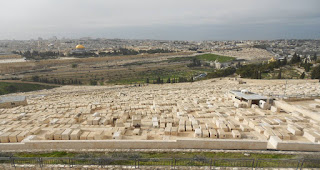


Instead of giving you a boring travelogue, I thought I would share some of my favorite pics (I apologize that they are a little out of order from the chronology of our itinerary). My short message is "go". Don't listen to the news- the Muslims were the nicest people I encountered there and the only fight I saw was between two Jews (another story for another time). To place yourself in the very geographical context of Scripture will open your mind, heart, and soul in fresh and life-giving ways. Enjoy!


A monument to the Hebrew vowels in Tiberias, where they were created. This is only important to biblical language nerds (guilty).

Me by the waterfall in Banias/Panias. Was this the place the author of Psalm 42 had in mind?

Caesarea Philippi, a center of Greek and Roman worship. This is also where Jesus asked his disciples, "Who do people say that I am?"

A view of Mount Hermon, the northernmost point of Israel, covered in snow


The Mona Lisa of the Galilee tile in Sepphoris, where Jesus and his father may have worked

A view of the Jezreel Valley from the Mount of the Precipice

Modern-day Nazareth from the Mount of the Precipice


The library cave at Qumran, where the Dead Sea Scrolls were found (again, only nerds are interested)


The Church of the Beatitudes on the supposed site of the Sermon on the Mount

Me floating in the Dead Sea with the ashen cross on my head


A typical street in Jerusalem's Muslim Quarter


A Franciscan friar tending to the olive trees in the Garden of Gethsemane

Rev. George Ragsdale and I presiding over a communion service in the Garden of Gethsemane

The Pool of Bethesda inside of Jerusalem's city walls. This is where Jesus healed the lame man in John 5 and told him, "Take up your mat and walk!"


Joseph of Arimathea's tomb in the Church of the Holy Sepulchre, Jerusalem. This tomb is unadorned and gives us a better idea of what Jesus' tomb would have looked like in the first century.

The "Jesus Boat" in a museum by the Sea of Galilee

Our group taking communion on the supposed site where Jesus fed the 5,000

The second synagogue in Capernaum, the city in which Jesus spent most of his ministry. The temple during Jesus' time likely lies beneath this structure.

The city gates at Bethsaida, hometown to some of Jesus' disciples. Can you spot the bull-like god/idol in the middle of the frame? Somehow it has lasted in this location approximately 2,800-3,000 years.


The site of Jereboam's altar at Dan. If you climb up the steps in the background, you can look into both Lebanon and Syria. As we were approaching this site, we heard several rounds of gunfire coming from the direction of Syria (where their inhumane civil war is still going on).

Wednesday, January 11, 2012
Joel Osteen
While I was on vacation last week, I saw a commercial on TV for OWN, the Oprah Winfrey Network. The spot showed a clip from Oprah's forthcoming interview with Joel Osteen, pastor of Lakewood Church in Houston, TX and perpetual punching bag for theological snobs like me. When Oprah asked questions in the clip regarding Osteen's wealth and preaching of the "prosperity gospel", I thought to myself, "OK, this is one Oprah interview I might actually watch."

So I made sure that I DVR'd the episode and I finally got around to watching it. While I was pleasantly surprised at some of his answers, I mostly heard what I expected.
I was shocked to hear that Osteen does not take a salary from his church. Osteen's income, according to him, comes from his book sales. While that does seem very admirable, Osteen's house (as shown in the interview) is baller. There was a huge grand piano behind him, he and Oprah were lounging on plush couches, and the houses in his neighborhood that you could see outside his window were anything but paltry in size. Osteen overtly does not apologize for his lifestyle, repeatedly referring to it as "a blessing". Well, it's a blessing for him, I guess; not so much for the kid in urban Houston who would do anything just to eat a grilled cheese sandwich tonight. I do think Jesus had something to say about a camel and a needle, as well as something in the Sermon on the Mount about the poor and blessings. Oh, and I think Paul may have had a lot to say about humility too. I can't remember exactly.
Also, I was intrigued by his approach towards ultimate salvation in other faiths. Upon Oprah asking him if Jesus is the only way to heaven (citing John 14:6), Osteen replied that people of different faiths may see Jesus in different ways. It was not the hard-line fundamentalist stance of exclusivism that I expected. While Osteen seemed to beat around the question for a while before he got to that answer, and though it is not the answer I would have given myself, it seems that Osteen may in fact have a brain and think through theological issues rationally (overturning some of my preconceived notions about him).
In my final point about surprises, Osteen seems very much on guard against the slickness of his televangelist predecessors. He is upfront about it in the interview. He knows the tradition in which he stands (seems strange to use "tradition" in a sentence about Osteen). He knows the stories of all of the Jim Bakkers that have gone before him. He desires to be authentic and true to his people. Props to him there. In fact, he may be trying to hard. In his benedictions he will throw in a few "ya'lls" and in his interview he almost seems to go out of his way to utter "Gosh, Oprah" and bashfully avert his gaze for someone who is a dynamic public speaker (ask any speech professional and they will tell you that, despite his theology, Osteen is a master at public speaking). But it is not my place to ultimately say whether or not he is genuine. That is between him, his congregation, and God.
All of this said, my ultimate beef with Osteen is in his general theological approach. Osteen is less a preacher of the Word of God than he is a self-help guru. His sermons are all about the individual and how one can better oneself. While there is a place for this in preaching, the ultimate crux of Christian theology is the Good News about God, not us. Intrinsic to any good theology is the basic notion that we humans are made in the image of God, yet there is, in the words of Karl Barth, an "infinite qualitative distinction" between us and God. In short, there is sin. Furthermore, we are encouraged in our struggle for holiness, not by our bootstraps, but by the community of faith. For a guy who is the pastor of the largest church in the US, he seems to have no ecclesiology (doctrine of the church). In the sermons of his that I have heard, Lakewood is approached as a collection of individuals rather than a community of those called out to bear with one another and serve in God's mission as the Body of Christ. Although it doesn't come through well in our translations (sadly), most of the exhortations in the Bible are in the second-person plural. In other words, Osteen might be best served to remember the deeper communal significance of one of his favorite words: "y'all".
Click here to see a clip from the interview.
Monday, December 12, 2011
Speaking of the Bishop
Check out this article written by him on the message of Christmas over and against some of the political and economic messages we are offered (especially this year with the GOP debates raging simultaneously with the Advent season). It serves as a prime example of his prophetic spirit. He and I actually had a conversation closely related to this topic during our time together (mentioned in my previous post). I'd like to think I inspired this article (probably not, but let me take what I can get). Let me know what you think.
Tuesday, December 6, 2011
24 Hours With The Bishop
Last week, I had the privilege of spending a day with the bishop of the North Alabama Annual Conference, Will Willimon. Willimon is a rather infamous character in the world of Methodism. On the one hand, he is known for being abrasive and unafraid of confrontation, all the while possessing the vocabulary of a disgruntled postal worker. Yet on the other hand, he is a role model for prophetic ministry, willing to take daring stands on issues of justice (including HB 56, Alabama's controversial immigration law), and a living archetype for the peculiarity of the life of a disciple of Jesus. Not to mention, he is often voted as one of the most influential and powerful preachers in the English-speaking world and referred to quite frequently as "the Pope of Methodism".

So when he sent me a message to see if I would join him for an overnight stay in Nashville, I jumped at the chance. I was to drive him to and from a meeting there, spend the night in a hotel, and accompany him on a visit to a district meeting in Athens, AL on our return trip. This is essentially what happened, so I won't bore you with the details of our itinerary.
What I will detail is the great respect I gained for him during our trip. I say this not to kiss his rear (he does not read this blog anyways; nor do more than about 3 people), but to counter both widespread attack of his character and the prevalent criticism that I often hear of the episcopacy in general.
Given his aforementioned reputation and my own mild-mannered nature as a people-pleaser, in conjunction with my greenness in ministry, I half expected him to criticize most of the things I said and leave me feeling like an intellectual and spiritual worm. Instead, I was not intimidated. Our conversations in the car were some of the most engaging I have ever had with anyone, let alone an authority figure. He has a deep concern for the thriving of the church and its ministers. He is especially concerned with the future of the church and the pastors who will lead it. Much of our conversation centered around generational differences between the world in which he grew up (the '60s) and the Sitz im Leben of us folks in our 20s and 30s, and how God might use those differences to raise up the Body of Christ. He seemed genuinely interested in my answers to his questions (which were very pointed and unguarded), and he offered up some wonderfully vulgar anecdotes (I have never heard so many four-letter words in my life, but somehow that rawness of the human condition he described in his stories was refreshing to hear) from his own experience- many of which you will probably hear in my future sermons (censored version, of course).
To my second point, I discovered that being bishop is a tough gig. As Bishop Ken Carder once said to a class of mine, "This is not a job to which you should aspire in ministry." I can see why. Throughout our discussions in the car, Willimon frequently had to check his e-mail and make phone calls in order to fulfill the administrative aspects of his job (fun fact: the Greek word for bishop, episkopos, literally means "overseer")- none of which was responding to pleasant requests, I'm sure. He somehow, while juggling all of these administrative tasks, managed to be a wonderful conversationalist and listener with someone whom he will likely not move to a new appointment (a primary duty of a UMC bishop) before he leaves this coming summer. Oh, and he had to prepare to give two lectures to a group of hundreds of clergy the next morning in Nashville, on top of preparing for a district meaning later on that afternoon.
Such is a day in the life of a bishop. I thought about how hectic that day was- speaking engagements, sleeping away from home, responding to complaints, etc. And then I thought about how he probably had to wake up the next day and do it all over again. And the day after that. And the day after that. Knowing what I know now about all that is on the plate of a bishop, along with the brief timetable they have to think through all of these matters, the unpredictability of job, and the tireless schedule, I will probably think twice before criticizing a bishop. In fact, I think I shall instead praise God for gifting such people with the rare abilities to oversee this messy, divine thing we call the church.
Wednesday, October 26, 2011
The Enigma of Young Adult Ministry
United Methodists (and all mainline Protestants for that matter) everywhere lament the decline in church membership and attendance among young adults. Since "young adult ministry" is under my purview here at Trinity and since I am a young adult, this issue is especially near and dear to me. Over the last year, I have been a part of several young adult ministry workshops, read a few good books on the subject, and experimented (while failing quite often) with ministry to younger adults. So I thought I would provide some tips on young adult ministry based on what I have discovered. As usual, I welcome your input on things you've seen that have worked.
- Beliefs haven't changed much, but participation has. One of the best resources I have found in my reading on young adults and religion is Robert Wuthnow's After the Baby Boomers. Among Wuthnow's myriad of observations in this book is the notion that young adults have not changed their abstract religious beliefs much since their parents' generation. In fact, some more "fundamentalist" beliefs have even strengthened among young adults since the '60s. What has changed, however, is the young adult's willingness to participate in a religious community. Wuthnow says that young adults today are "tinkerers", experimenting with other forms of communal life (read: other religions, partying, etc.), before "settling down" once they get marred and have children (both milestones that Wuthnow reveals are happening later than they used to). For reading more specific to the ages 18-22, I recommend Souls in Transition by Christian Smith and Patricia Snell.
- So what defines a young adult? When I tell folks my responsibilities at Trinity, this is often one of the first questions they will ask me. And it is certainly a fair question. It's not as if one day one wakes up and is or is no longer a young adult. And further, what defines an activity that is specifically young adult? Again, another question for which there is no cut and dry answer. I have found that each church is different. At Trinity, we define a young adult as aged 22-35, setting age limits so as to prevent the "slippery slope principle" (I'm looking at you, dude in your forties with three kids who thinks he's still "hip"). Also, we try to focus on and celebrate specific life events, such as weddings and births, and stratify our ministry according to the life stages that correspond to these events. The natural drawback here is that not everyone falls in one of these stages at the same age, level of emotional maturity, and knowledge of faith. Last week, I attended the General Board of Discipleship's Young Adult Summit in Austin, Texas. One of my colleagues in Arizona told me that she organizes young adult activities by meeting time and not age, i.e., one group meets at 9PM and another meets at 5PM, thus separating those who have children from those who do not. I thought it was a pretty creative idea!
- "Feed them and they will come." This was the mantra of the director of young adult ministries at The United Methodist Church of the Resurrection. And it stands universally true- especially for young singles. Providing free food is not only an attractive way to bring in a person who may have a small budget and a big stomach, but it is simply the way of Christ, who was not afraid to share table fellowship with anyone.
- Don't depend on Sundays. Whatever ecclesiological or theological issue we may have with it, as a general principle, we cannot count on young adults to be present for any weekend activity, including Sunday worship. The truth is that young adults are more mobile now than they have ever been, so it is nothing for them to travel back home or to see friends over a weekend. And, as is often the case at Trinity, there is another god to rival- SEC football. But it's not that young adults don't care. They just want it all- personal time, work time, and worship time. So the most effective models of young adult ministry I have seen involve at least one weeknight meeting.
- Social media may be over-hyped. This is one old man's opinion (mine). While I have found Facebook, Twitter, e-mail, etc. to be helpful in getting the word out about events and programs, nothing beats good, old-fashioned face-to-face ministry. In fact, I think one of the responses of the church to young adults these days can be that God and the church do not want to love you at a digital arm's length. We want to meet you with love where you are most real and most vulnerable- in person.
-No one is doing young adult ministry well. This tip is both comforting and unsettling. One of my assignments when I first arrived at Trinity was to speak with those who were doing young adult ministry well and incorporate some of their ideas here. As it turns out, no minister to young adults is remotely satisfied with the job that he or she is doing. It is inherently a challenge to minister to young adults. In fact, the most encouraging thing I have heard (for my sake) was when someone told me that Church of the Resurrection, a congregation of 18,000 members compared to our 3,100, has slightly less young singles at its weekly gathering that we do. Yet, I still feel that there is so much we could be doing to minister to young adults. I have a very optimistic hope that the United Methodist Church has a strong future with my generation and the generations to follow. Even though the times may change, God's grace (the central theological tenet of our denomination) will always be the source of all good and hope in this world.
Wednesday, September 14, 2011
The Hope in Failure
"Fail" has become a trendy word of late. We read it along with the adjective "epic" in the comment section underneath YouTube videos of stupid human tricks gone wrong (see this one for a good laugh). After a showing of Sports Center's "Not Top 10", a snarky sportscaster will likely use the word to describe #1. There is even a popular blog that brings gratification to those of us insecure enough to enjoy hearing stories of the missteps of others. "Fail" is a word that has simply taken on a life of its own in our culture.
A couple of my own recent "failures" in ministry have jostled my confidence, and they have prompted me to think theologically about the word. How does Scripture see failure? Can a Christian fail in God's eyes? Does it matter to God when we fail in our jobs or our relationships?
The Biblical sense of "fail" covers a spectrum of nuance. In the Old Testament, it generally refers to a food or some staple being used up before it can be replenished. For instance, in the story of Elijah and the Widow of Zarephath in 1 Kings 17, God promises that "the jug of oil will not fail" the famished woman and her household. This definition of "fail" strikes me in my own case, as I felt the quality of my efforts sufficient but the circumstances did not dictate "success" (another term that needs desperate definition in church leadership).
In the New Testament, the word we translate as "fail" is also the same word we translate as "sin". "Sin" is a term that simply means "missing the mark", an archery word. Notice that it does not entail evil intention (as we often want to color sin) necessarily, but rather that we do not reach an expected intention. For God's people, that intention is God's Kingdom. When we participate in evil ways, we miss the mark of that goal. Thankfully, we believe in a merciful God and a (hopefully) forgiving community who lets us keep on trying.
So, yes, I think we can fail in God's eyes. In the first sense, we can give all of the effort within us to one good task and still run out of steam. But the God in Jesus who poured himself out fully (Philippians 2:7) can re-fill us to no end. And in the second sense, we may stray from our mark no matter what our intentions. But we are called to try with all our heart (see Romans 14:5-7; I am also thinking here of the Lutheran exhortation to "sin boldly"), and God will keep handing us a new arrow from the quiver.
The truth is that we will fail in many aspects of our lives. We will even have epic fails. Our confidence may even be shattered in the process. But God will not fail and God will not fail us (in both senses of the word). In fact, I hope we can recognize this to the point that we can laugh about it (seriously, click on the links in the first paragraph).
Tuesday, August 23, 2011
Narrative Theology
Since the day I began the ordination process, I have told my "faith story" a thousand times. I have broadcast it in commissioning papers, seminary spiritual formation groups, church meetings, and UMW circle programs. At first, I was excited to tell it- I wanted everyone to know the path that had led to my calling. But now, I admit, it has become routine, and I often do not enjoy feeling so narcissistic as I drone on about myself.
Homewood , AL
Despite that, I take comfort in two things: One, that our stories are important to God. Jesus' life was told the in the form of a story (four of them, actually). There are countless examples in Scripture and church history of spiritual autobiographies (my suggestion is to read Acts 6 and 7, and see how the story of Stephen is crafted to fit the passion story in Luke's gospel). It is simply important that we view our lives along a trajectory in which we "wrestle" with God (see Genesis 32), a trajectory in which we are confident that God will win us over in the end. This leads me to my second point. That is that God is not finished with my faith story. If God were, I would be a pathetic example of God's power, because I know that my potential of faithfulness has not yet been reached.
As such, forgive me if the following is narcissistic. I have posted below a version of my faith story which I recently wrote for another ordination assignment. It is brief because of page limits- I would add so much more otherwise. But nonetheless, I hope it encourages you to think of your story, how far you've come, and what God has left to do with you. Enjoy.
My spiritual pilgrimage began when I was baptized at
In my teenage years however, I began to distance myself from the church. I attended worship services regularly and read religious books on my own, but rarely attended youth group as I felt that it was too cliquish to be an authentic faith community. Looking back, I feel like this was one of the biggest mistakes in my life of faith. At this impressionable age, I had allowed my faith to become an individual affair based on my own feelings and knowledge. Although I had held to most of the tenets of the faith during this time, I had lost sight of one of the most crucial of those tenets- God’s call for us to live in faithful community with one another.
It wasn’t until my freshman year of college that I began to see the importance of the community of faith. During that year, I was immersed in a college ministry at a local United Methodist congregation. Within a matter of weeks of arriving on campus, I attended Sunday School for the first time in years, attended my first mission trip, and forged several key relationships with faithful Christians, all thanks to the ministry of that local church. It was there that I began to see the potential of God’s power at work through the local church. And it was there that I began to sense that I had certain gifts that would enable me to be a congregational leader.
Despite the wonderful experience I had in my undergraduate years, it was not long after graduation that my exuberance for God began to taper. A few months after graduation, I experienced an unexpected deviation in my life’s plan as my fiancée at the time called off our impending marriage. This caused me to move back home to
What followed was certainly the single-most influential experience in God’s call on my life. In August of 2006, I attended a mission trip to
Over the next several months, I decided to test this newfound excitement to make sure that this was my calling from God. I took a leadership role in my church’s (Myers Park UMC in
What followed was three years of academic challenge and intense spiritual growth. I was even able to gain experience in leadership, preaching, and teaching in the local church setting through my two rural field education placements in the summers of 2008 and 2009 (at Palmyra UMC in Germanton, NC and Orange Chapel UMC in Chapel Hill, NC, respectively).
In the spring of 2010, after months of interviewing for associate positions in United Methodist Churches, I was offered and accepted the position of Minister of Evangelism and Young Adults at Trinity UMC inMy experience at Trinity has been fantastic. I have made great strides as a church leader, preacher, and pastoral caregiver. I still have much to learn, but I am excited about my growth and the potential I have to grow in this particular ministry to which God has called me.
Thursday, July 21, 2011
On Divorce
Lately, I have had several conversations with folks about divorce. They want to know what the Christian response is, how we should act towards someone who is going through a divorce, and what the Bible teaches about it. So here are some of my reflections on the subject.
The first thing I will say is that divorce is always regrettable. I don't think anyone should be happy about divorce, no matter who may benefit from it. Sure, divorce may be inevitable should a marriage be irreconcilable, a child's happiness be at stake, etc. But it should not be a joyful occasion that God has "joined together" two persons only for them to be "rent asunder". Even though divorce may be the first step to healing, there was some initial rift that has lead to this brokenness, and that is worth lamenting. In our world today, it seems that divorce is routine. We go to the supermarket checkout every week and see that some 30-year-old starlet has divorced her third husband. 60% of marriages end in divorce (I am including here second marriages, in which that rate increases). I have even been to wedding receptions where groomsmen have set odds and taken bets on the success of a marriage. As a pastor, I despise the sin that has made the rupture of divorce so normal and expected in our world. And I wholeheartedly believe that Christianity has a response.
Scripture indeed takes a hard stance against divorce. Matthew 5 and 19, Mark 10, and Luke 16 all speak out against it (although Matthew adds the stipulation that divorce is acceptable in the case of unchastity). Other texts that speak to divorce include 1 Corinthians 7, Malachi 2, and Deuteronomy 24. Nowhere does the Bible insinuate that brokenness in a marriage is good and that God is OK with us reneging on the covenant vows we have made- mostly because, in parallel, God has not reneged on God's covenants with us. You will also often hear the valid exegetical point that a united marriage is a crucial tool for Christian discipleship and witness to God.
But since you've probably encountered all of that before, here is another crucial theological and pastoral point that I think is often overlooked: marriage is also the church's participation in sin. In our world, we are accustomed to thinking about divorce fundamentally as a rift between two persons. But I think we all know (when we really think about it) that marriage doesn't happen with a couple in a vacuum- it involves families, friends, children, exes, etc. And the New Testament speaks to that. It sees the church as pivotal to the formation and maturity of a marriage. The Gospel writers and Paul were all concerned to create a community in which sin could be combated by the power of the cross made manifest in the body of Christ. The church often stresses that the wedding ceremony as a three-part covenant between the couple, God, and the church. When a married couple joins a new congregation, implicit in that is that the church will help to bear their burdens. So there are important communal components to marriage that frequently go unnoticed. That is because the church is called to be the place where we recognize that and where the couple grows in its discipleship and in unity with God and one another. In today's church, this includes practices like premarital counseling and Sunday Schools and small groups geared towards mutual support in marriages.
And we have admittedly failed, myself included. We have allowed an environment in the church where couples do not feel like they can be open and vulnerable about the issues affecting their marriage- such as sex, money, and deep friendship. Discussing and being open about such things are signs of weakness on the part of the one sharing these things. And if you're like me, you are tempted to roll your eyes and cry "TMI" when someone opens up with such information.
But weakness is what we are all about in the church, because weakness is what the cross was all about. And the sin and brokenness that infects a marriage will easily break our own attempts to be strong. Instead, sin and brokenness in marriage cannot penetrate the weakness and vulnerability shown through the strength of a community shaped by the cross, the cross the overcame all sin and brokenness. It takes a community of disciples devoted to the shaping of not just themselves as followers of Jesus, but also their brothers and sisters in Christ.
I am aware that my perspective may be naive. I have a very healthy marriage, my parents never divorced, and I am thankfully wed to a committed disciple of Jesus, so what do I know? Admittedly and by the grace of God, I don't know much from my own experience. But I have stood by in the church for far too long and watched marriages of good people dissolve, while the folks in the pews gossip and go about their own lives. I do not mean to imply that all Christian communities of faith do a poor job of promoting environments for a healthy marriage- there are many that do a great job of it. But I will not be satisfied to continue to see divorce accepted blithely in the church. I just hope that my fellow Christians and I can work on fostering an environment where marriages can thrive and that, maybe, we can start to take the logs out of our own eyes.
The first thing I will say is that divorce is always regrettable. I don't think anyone should be happy about divorce, no matter who may benefit from it. Sure, divorce may be inevitable should a marriage be irreconcilable, a child's happiness be at stake, etc. But it should not be a joyful occasion that God has "joined together" two persons only for them to be "rent asunder". Even though divorce may be the first step to healing, there was some initial rift that has lead to this brokenness, and that is worth lamenting. In our world today, it seems that divorce is routine. We go to the supermarket checkout every week and see that some 30-year-old starlet has divorced her third husband. 60% of marriages end in divorce (I am including here second marriages, in which that rate increases). I have even been to wedding receptions where groomsmen have set odds and taken bets on the success of a marriage. As a pastor, I despise the sin that has made the rupture of divorce so normal and expected in our world. And I wholeheartedly believe that Christianity has a response.
Scripture indeed takes a hard stance against divorce. Matthew 5 and 19, Mark 10, and Luke 16 all speak out against it (although Matthew adds the stipulation that divorce is acceptable in the case of unchastity). Other texts that speak to divorce include 1 Corinthians 7, Malachi 2, and Deuteronomy 24. Nowhere does the Bible insinuate that brokenness in a marriage is good and that God is OK with us reneging on the covenant vows we have made- mostly because, in parallel, God has not reneged on God's covenants with us. You will also often hear the valid exegetical point that a united marriage is a crucial tool for Christian discipleship and witness to God.
But since you've probably encountered all of that before, here is another crucial theological and pastoral point that I think is often overlooked: marriage is also the church's participation in sin. In our world, we are accustomed to thinking about divorce fundamentally as a rift between two persons. But I think we all know (when we really think about it) that marriage doesn't happen with a couple in a vacuum- it involves families, friends, children, exes, etc. And the New Testament speaks to that. It sees the church as pivotal to the formation and maturity of a marriage. The Gospel writers and Paul were all concerned to create a community in which sin could be combated by the power of the cross made manifest in the body of Christ. The church often stresses that the wedding ceremony as a three-part covenant between the couple, God, and the church. When a married couple joins a new congregation, implicit in that is that the church will help to bear their burdens. So there are important communal components to marriage that frequently go unnoticed. That is because the church is called to be the place where we recognize that and where the couple grows in its discipleship and in unity with God and one another. In today's church, this includes practices like premarital counseling and Sunday Schools and small groups geared towards mutual support in marriages.
And we have admittedly failed, myself included. We have allowed an environment in the church where couples do not feel like they can be open and vulnerable about the issues affecting their marriage- such as sex, money, and deep friendship. Discussing and being open about such things are signs of weakness on the part of the one sharing these things. And if you're like me, you are tempted to roll your eyes and cry "TMI" when someone opens up with such information.
But weakness is what we are all about in the church, because weakness is what the cross was all about. And the sin and brokenness that infects a marriage will easily break our own attempts to be strong. Instead, sin and brokenness in marriage cannot penetrate the weakness and vulnerability shown through the strength of a community shaped by the cross, the cross the overcame all sin and brokenness. It takes a community of disciples devoted to the shaping of not just themselves as followers of Jesus, but also their brothers and sisters in Christ.
I am aware that my perspective may be naive. I have a very healthy marriage, my parents never divorced, and I am thankfully wed to a committed disciple of Jesus, so what do I know? Admittedly and by the grace of God, I don't know much from my own experience. But I have stood by in the church for far too long and watched marriages of good people dissolve, while the folks in the pews gossip and go about their own lives. I do not mean to imply that all Christian communities of faith do a poor job of promoting environments for a healthy marriage- there are many that do a great job of it. But I will not be satisfied to continue to see divorce accepted blithely in the church. I just hope that my fellow Christians and I can work on fostering an environment where marriages can thrive and that, maybe, we can start to take the logs out of our own eyes.
Wednesday, July 6, 2011
Hold On, Wait Atonement!
Over the last few days, I have been researching atonement theories (i.e., the doctrine of what Christ did for us on the cross) for a lecture I will be giving in the fall. Sad to say, but I realized during my study how limited my knowledge of the various atonement theories is. I understand the basic differences between the approaches in Western Christianity and Eastern Christianity, but, over the last few days, I have been enlightened as to the subtle differences between atonement theories in the Western tradition (i.e., the tradition in which 90-some-percent of us in the U.S. lie).

Of the various theories, the one with which I was most familiar is the Penalty Satisfaction theory, championed by the Reformers. This theory basically says that Christ paid the penalty of sin due to God instead of us humans doing so. This gift of Christ then sets us free from owing anything to God for appeasing God's wrath. This theory is built upon prior theories by Anselm and Thomas Aquinas in terms of Christ fulfilling some kind of "satisfaction" to God that we could not fulfill, but focused more on how this justifies and saves individuals.
Another theory of which I had heard, but was largely unfamiliar was the Moral Influence theory, attributed to Peter Abelard. Abelard was troubled by Anselm's assumptions that God needed to be satisfied, so he claimed that the cross was an instrument to calm our fears about God, to know God's love, and to respond to others.
Similarly, I was somewhat familiar with the Ransom theory, but largely unlearned as to its nuances. Essentailly, this theory details how Christ on the cross dies, goes to Hell, tricks Satan, and frees humankind from the power of sin in the resurrection.
Although there are several other theories in Western Christianity, I note these because of their particular influence upon John Wesley, our Methodist theological godfather. Wesley certainly stood squarely within his 18th century Protestant context in explaining the abstract componenets of the atonement, but he also wanted to explain how it effects us today in the church and as a response to God's grace. As Wesley scholar Randy Maddox states in the greatest book about Wesleyan theology ever written, all three of these theories had a profound influence upon Wesley: "One is tempted to describe [Wesley's approach to atonement] as a Penalty Satisfaction explanation of the Atonement which has a Moral Influence purpose, and a Ransom effect." (109)
That said, I have two serious problems with Western explanations of the atonement. First, almost all of them seem to overlook both the incarnation and the resurrection. Western theologians have certainly emphasized Christ's two natures, but they have mostly done so in order to see Christ as a divine substitute for humanity and not as the God who sympathizes with our human condition. And the primary highlight of what God does with that humanity is not just to kill it and then all of a sudden, something magic happens to people who "believe". Instead, God resurrects that human nature, thus redeeming it. In essence, my beef here is that we have focused so much on Christ's death as an end in itself, not as a means to its overcoming for the benefit of all humanity.
The second point is this one I found during my study by the theologian Robert Jenson. Jenson reminds us that God does not need satisfaction from the human side. God does not try to be reconciled to us. God is not a long-lost parent who tries to rekindle a relationship with estranged children. Instead, God has been there all along. What Christ did on the cross was pure grace- in other words, free gift. We can take it or leave it. It was an attempt to reconcile us to Godself- to show us lost children the way back. It is us humans who then are able to participate in the divine life thanks to the God who also took on and knows quite painfully our human nature. (see William C. Placher, Essentials of Christian Theology, 191-205)
If that doesn't resonate with you or if it doesn't make sense, let me simply leave you with Paul's words from Romans 6. I think he says it much better than I:
"What then are we to say? Should we continue in sin in order that grace may abound? By no means! How can he who died to sin go on living in it? Do you not know that all of us who have been baptized into Christ Jesus were baptized into his death? Therefore we have been buried with him by baptism into death, so that, just as Christ was raised from the dead by the glory of the Father, so we too might walk in the newness of life. For if we have been united with him in a death like his, we will certainly be united with him in a resurrection like his."
Of the various theories, the one with which I was most familiar is the Penalty Satisfaction theory, championed by the Reformers. This theory basically says that Christ paid the penalty of sin due to God instead of us humans doing so. This gift of Christ then sets us free from owing anything to God for appeasing God's wrath. This theory is built upon prior theories by Anselm and Thomas Aquinas in terms of Christ fulfilling some kind of "satisfaction" to God that we could not fulfill, but focused more on how this justifies and saves individuals.
Another theory of which I had heard, but was largely unfamiliar was the Moral Influence theory, attributed to Peter Abelard. Abelard was troubled by Anselm's assumptions that God needed to be satisfied, so he claimed that the cross was an instrument to calm our fears about God, to know God's love, and to respond to others.
Similarly, I was somewhat familiar with the Ransom theory, but largely unlearned as to its nuances. Essentailly, this theory details how Christ on the cross dies, goes to Hell, tricks Satan, and frees humankind from the power of sin in the resurrection.
Although there are several other theories in Western Christianity, I note these because of their particular influence upon John Wesley, our Methodist theological godfather. Wesley certainly stood squarely within his 18th century Protestant context in explaining the abstract componenets of the atonement, but he also wanted to explain how it effects us today in the church and as a response to God's grace. As Wesley scholar Randy Maddox states in the greatest book about Wesleyan theology ever written, all three of these theories had a profound influence upon Wesley: "One is tempted to describe [Wesley's approach to atonement] as a Penalty Satisfaction explanation of the Atonement which has a Moral Influence purpose, and a Ransom effect." (109)
That said, I have two serious problems with Western explanations of the atonement. First, almost all of them seem to overlook both the incarnation and the resurrection. Western theologians have certainly emphasized Christ's two natures, but they have mostly done so in order to see Christ as a divine substitute for humanity and not as the God who sympathizes with our human condition. And the primary highlight of what God does with that humanity is not just to kill it and then all of a sudden, something magic happens to people who "believe". Instead, God resurrects that human nature, thus redeeming it. In essence, my beef here is that we have focused so much on Christ's death as an end in itself, not as a means to its overcoming for the benefit of all humanity.
The second point is this one I found during my study by the theologian Robert Jenson. Jenson reminds us that God does not need satisfaction from the human side. God does not try to be reconciled to us. God is not a long-lost parent who tries to rekindle a relationship with estranged children. Instead, God has been there all along. What Christ did on the cross was pure grace- in other words, free gift. We can take it or leave it. It was an attempt to reconcile us to Godself- to show us lost children the way back. It is us humans who then are able to participate in the divine life thanks to the God who also took on and knows quite painfully our human nature. (see William C. Placher, Essentials of Christian Theology, 191-205)
If that doesn't resonate with you or if it doesn't make sense, let me simply leave you with Paul's words from Romans 6. I think he says it much better than I:
"What then are we to say? Should we continue in sin in order that grace may abound? By no means! How can he who died to sin go on living in it? Do you not know that all of us who have been baptized into Christ Jesus were baptized into his death? Therefore we have been buried with him by baptism into death, so that, just as Christ was raised from the dead by the glory of the Father, so we too might walk in the newness of life. For if we have been united with him in a death like his, we will certainly be united with him in a resurrection like his."
Wednesday, June 22, 2011
First Year Reflections
Monday, June 20th marked my one-year anniversary of serving here at Trinity. I will state the usual cliche that I cannot believe that it has been a year already. I will also say that I feel like I have been super busy without feeling like I have accomplished a whole lot (I have heard that I share this sentiment with most pastors). But most importantly, I will say that God has been at work through my efforts here. And nothing could be more valuable to me as I assess my faithfulness as a pastor.
A few months back, one of our congregation's young adults asked me what I do all day. For a split second, I felt offended, because I thought that she was intimating that my daily work couldn't possibly be that worthwhile. But then, I realized that I used to ask the same questions about my pastors, and that most of the members of the church (who usually only see the fruits of my labors on Sunday morning or in church meetings) truly do not know what it is that we do all day, and want to know that we are being good stewards of their donated funds.
Well, in response to this question and in honor of my first anniversary at Trinity, I thought I would list some of the tasks that accompany a typical week for me. As an associate pastor who does not preach on a weekly basis and does not have a singular focus for ministry, I am tasked with scattered (but important!) responsibilities. So here is a tasting of the things that I regularly do around here:
- As the pastor of Evangelism, I and a team of two other great staff members (Lisa Elliott and Karen Smith) contact (via e-mail, phone, or note) visitors to our worship services in order to get to know them and to see if we can assist them in their walk of faith in any way. Also, this responsibility involves making sure that Trinity is a hospitable place.
- As the pastor for our Young Adult ministries, I am in charge of organizing events (like our YA Tailgate and Convergence), YA Sunday Schools, and other YA small groups. Did you know that Trinity has over 500 members who are between the ages of 22 and 35???
- I am also in charge of our Men's Ministry, which involves me helping to plan two dinners every year, along with men's small groups.
- I coordinate the Trinity Business Directory, an online yellow pages for Trinity's entrepreneurs and small business owners.
- I am the staff liaison for Trinity's Boy Scout troop, Troop 97.
- I am in charge of creating Trinity's annual church-wide survey.
- I am also charged with overseeing the Family Life Center (gym), where we host birthday parties and athletic events.
- In the fall and spring, I teach one short-term small group.
- Every Tuesday morning, I join the clergy and the entire church staff for meetings to discuss the prior Sunday, the upcoming Sunday, other events and ministries around the church, and also long-range planning for the future of the congregation. Most of the staff meets between these two meetings for a short, 30-minute chapel service.
- General pastoral duties include weekly hospital visitation, counseling (marriage and personal), preaching (which I have done about once per month on average), and other worship responsibilities.
- I have found that working on my own spiritual formation in the midst of all of this is crucial to my growth as a pastor. As such, I read a psalm and pray before I turn on my computer every day. I spend about 10-15 minutes translating one or two verses from my Hebrew Bible and my Greek New Testament. If I have enough free time at the office, I will also try to get some pertinent reading done (to see what I'm currently reading, friend me on Goodreads).
- In order to compensate for our work on Sunday and business "after hours" throughout the week, I am granted one day off in the middle of the week (which is usually errand day!).
- Occasionally, I find time to post a blog.
A few months back, one of our congregation's young adults asked me what I do all day. For a split second, I felt offended, because I thought that she was intimating that my daily work couldn't possibly be that worthwhile. But then, I realized that I used to ask the same questions about my pastors, and that most of the members of the church (who usually only see the fruits of my labors on Sunday morning or in church meetings) truly do not know what it is that we do all day, and want to know that we are being good stewards of their donated funds.
Well, in response to this question and in honor of my first anniversary at Trinity, I thought I would list some of the tasks that accompany a typical week for me. As an associate pastor who does not preach on a weekly basis and does not have a singular focus for ministry, I am tasked with scattered (but important!) responsibilities. So here is a tasting of the things that I regularly do around here:
- As the pastor of Evangelism, I and a team of two other great staff members (Lisa Elliott and Karen Smith) contact (via e-mail, phone, or note) visitors to our worship services in order to get to know them and to see if we can assist them in their walk of faith in any way. Also, this responsibility involves making sure that Trinity is a hospitable place.
- As the pastor for our Young Adult ministries, I am in charge of organizing events (like our YA Tailgate and Convergence), YA Sunday Schools, and other YA small groups. Did you know that Trinity has over 500 members who are between the ages of 22 and 35???
- I am also in charge of our Men's Ministry, which involves me helping to plan two dinners every year, along with men's small groups.
- I coordinate the Trinity Business Directory, an online yellow pages for Trinity's entrepreneurs and small business owners.
- I am the staff liaison for Trinity's Boy Scout troop, Troop 97.
- I am in charge of creating Trinity's annual church-wide survey.
- I am also charged with overseeing the Family Life Center (gym), where we host birthday parties and athletic events.
- In the fall and spring, I teach one short-term small group.
- Every Tuesday morning, I join the clergy and the entire church staff for meetings to discuss the prior Sunday, the upcoming Sunday, other events and ministries around the church, and also long-range planning for the future of the congregation. Most of the staff meets between these two meetings for a short, 30-minute chapel service.
- General pastoral duties include weekly hospital visitation, counseling (marriage and personal), preaching (which I have done about once per month on average), and other worship responsibilities.
- I have found that working on my own spiritual formation in the midst of all of this is crucial to my growth as a pastor. As such, I read a psalm and pray before I turn on my computer every day. I spend about 10-15 minutes translating one or two verses from my Hebrew Bible and my Greek New Testament. If I have enough free time at the office, I will also try to get some pertinent reading done (to see what I'm currently reading, friend me on Goodreads).
- In order to compensate for our work on Sunday and business "after hours" throughout the week, I am granted one day off in the middle of the week (which is usually errand day!).
- Occasionally, I find time to post a blog.
Subscribe to:
Posts (Atom)